Pregnancy is a time of incredible change, and while many of these changes are exciting, some can be uncomfortable. For many expectant mothers, the appearance of varicose veins is a common and often unwelcome development. These bulging, twisted, and sometimes painful veins typically appear on the legs but can also develop in the vulvar region. While they are usually harmless and often improve after delivery, they can cause significant discomfort and, in some cases, may signal an underlying issue with your circulation.
Understanding why varicose veins occur during pregnancy and knowing how to manage them can help you have a more comfortable experience. The specialists at South Valley Vascular are here to provide guidance and care for expectant mothers dealing with venous issues throughout the Central Valley.
Several factors related to pregnancy contribute to the development of varicose veins:
While you may not be able to prevent varicose veins entirely, especially if you have a strong genetic predisposition, there are many safe and effective ways to manage the symptoms and prevent them from worsening during your pregnancy.
1. Stay Active: Regular, low-impact exercise like walking or swimming is one of the best things you can do for your circulation. Movement helps your calf muscles pump blood back up toward your heart, reducing pooling in your leg veins.
2. Elevate Your Legs: Whenever you have the chance to sit or lie down, elevate your legs above the level of your heart. This uses gravity to help drain blood from your lower extremities and reduce swelling. Try to do this for 15-20 minutes several times a day.
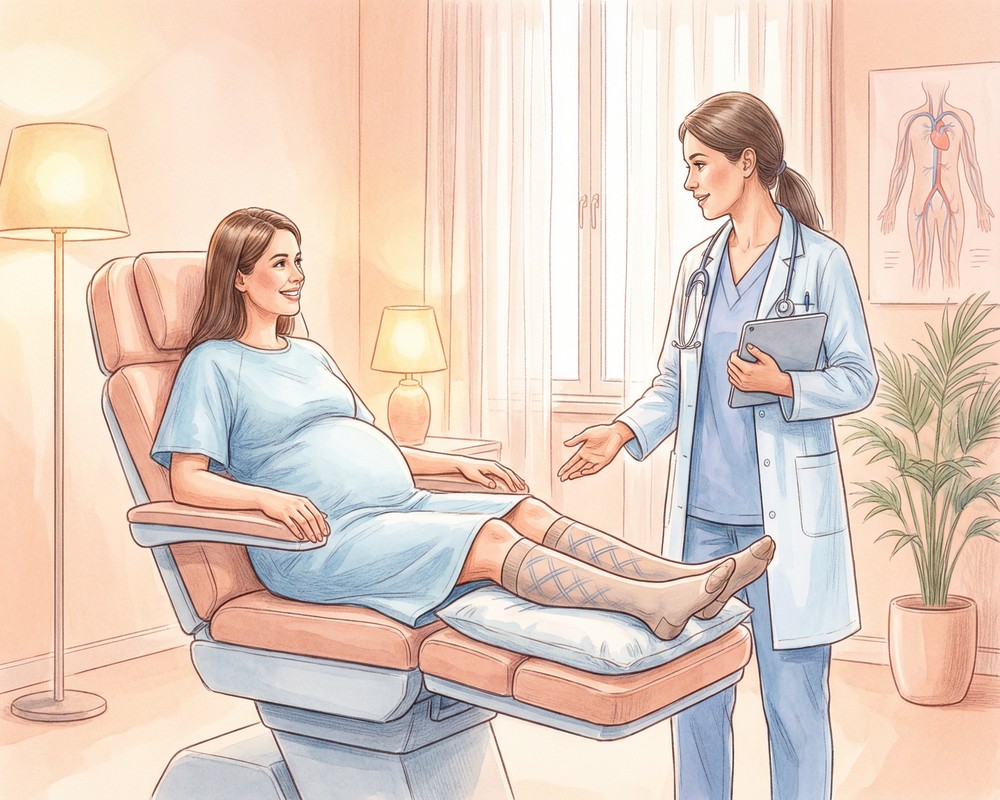
3. Wear Compression Stockings: Medical-grade graduated compression stockings are a cornerstone of managing venous issues during pregnancy. They provide gentle, consistent pressure that is tightest at the ankle and gradually decreases up the leg. This helps support your vein walls and improve blood flow. Your vascular specialist can help you get the right size and compression level.
4. Avoid Prolonged Standing or Sitting: If your job requires you to be on your feet for long periods, take frequent breaks to sit down and elevate your legs. If you have a desk job, get up and walk around for a few minutes every hour. When sitting, avoid crossing your legs, which can hinder circulation.
5. Sleep on Your Left Side: Sleeping on your left side helps to relieve pressure on the inferior vena cava, which is located on the right side of your body. This can improve blood flow from your legs back to your heart.
6. Manage Your Weight: While weight gain is a normal and necessary part of pregnancy, working with your obstetrician to maintain a healthy weight gain can help minimize the strain on your circulatory system.
For most women, varicose veins are a temporary cosmetic concern that improves within a few months after giving birth. However, you should consider scheduling a consultation with a vascular specialist if you experience:
A vascular specialist can perform a non-invasive duplex ultrasound to assess your veins and rule out any more serious issues. They can also provide expert fitting for medical-grade compression stockings and discuss a long-term plan if the veins do not resolve after your pregnancy.
If your varicose veins persist for more than three to six months after you have delivered your baby and they continue to bother you, there are several minimally invasive treatment options available. These procedures, such as endovenous ablation and sclerotherapy, are highly effective and can be performed in our office with minimal downtime. Your vascular surgeon will discuss the best options for you once you are no longer pregnant or breastfeeding.
Dealing with varicose veins can be an added stress during pregnancy, but you do not have to manage it alone. The team at South Valley Vascular understands the unique circulatory challenges that expectant mothers face. We offer safe, effective management strategies to keep you comfortable and healthy throughout your pregnancy. To schedule a consultation, please call us at (559) 625-4118.
Disclaimer: The information provided in this article is for educational purposes only and does not constitute medical advice. It is not intended to be a substitute for professional medical advice, diagnosis, or treatment. Always seek the advice of your physician or other qualified health provider with any questions you may have regarding a medical condition. Never disregard professional medical advice or delay in seeking it because of something you have read in this article.